Imagine a high-volume manufacturing floor running at peak capacity. Suddenly, a critical line grinds to a halt. A custom tungsten carbide die has finally breached its wear tolerance, drifting just enough out of specification to trigger a quality control rejection.
In a traditional shop, this moment sparks immediate panic. The real problem isn’t just the capital required to purchase a replacement tool. The true nightmare is the estimated lead time from the original equipment manufacturer (OEM). When custom tooling queues stretch out for weeks or months, a stalled production line can quickly bleed thousands of dollars an hour.
Relying on a reactive, “buy new on failure” procurement model leaves your production schedule at the mercy of global supply chains. A far more stable, cost-effective approach is transitioning to a proactive, pre-staged tiered inventory strategy. By keeping precision-resized backup tiers sitting ready in your tool room, you can transform a logistical catastrophe into a routine, controlled tool swap.
Calculating the True Cost of OEM Downtime
Many manufacturing plants evaluate the cost of tooling strictly by the invoice price of the asset. This reactive math overlooks the massive financial damage that accumulates when a production line sits cold. When an OEM lead time leaves you waiting weeks for a custom replacement, the hidden expenses stack up rapidly across several operational areas:
- Idle Operator Labor: You are still paying for scheduled shop floor labor and overhead, even if technicians have no material to run.
- Fractured Client Relationships: Missing a delivery deadline due to a tooling bottleneck strains customer trust and can result in severe contractual penalties.
- Emergency Expediting Fees: Attempting to cut a multi-week OEM queue often requires paying massive premiums for rushed fabrication and overnight air freight.
When global supply chains face volatility, relying on just-in-time delivery for custom tooling becomes a high-stakes gamble. Plant managers must shift their perspective away from the superficial price of a service and focus instead on the total cost of asset downtime. Having a pre-staged backup strategy ensures you are never forced to choose between an idle machine and an exorbitant emergency order.
The Tiered Backup Strategy: A Safety Net in the Tool Room Drawer
Instead of throwing a worn tool into the scrap bin and placing a frantic call to the factory, a tiered inventory strategy utilizes pre-staged, sequential backups.
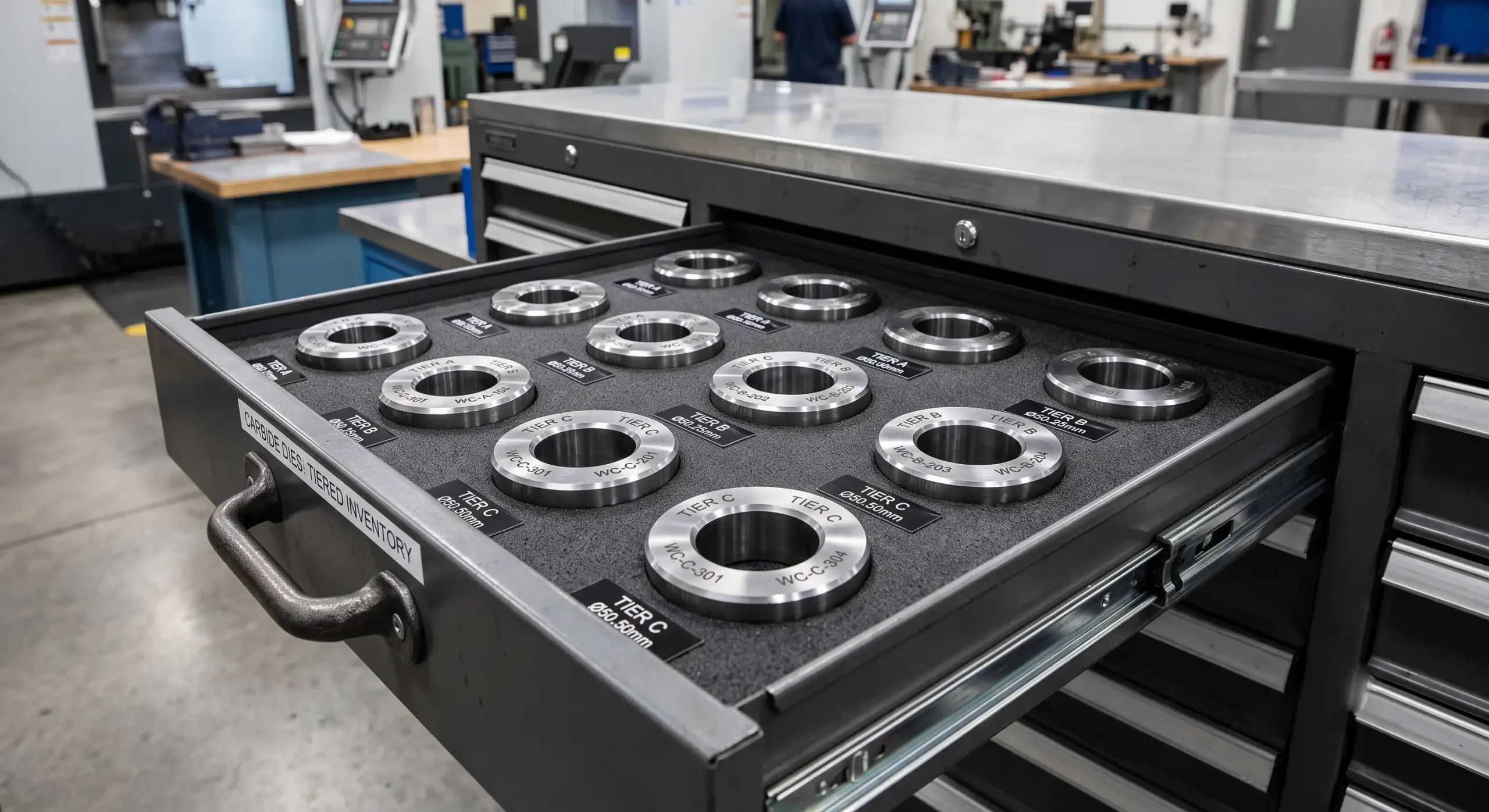
Consider how this works in a practical setting. When a primary carbide tooling die drifts out of specification, it is pulled from service. Instead of waiting weeks for a brand-new replacement of the exact same size, the tool room operator simply opens a drawer and pulls out a pre-staged “Tier B” or “Tier C” backup die that has already been precision-resized to the next required production dimension.
Because these backup tiers are sitting safely on your shelf, the line is only down for the duration of a standard, scheduled tool change. You effectively replace an unpredictable multi-week procurement delay with a predictable, minutes-long mechanical adjustment. Furthermore, this method maximizes the value of your initial capital expenditure. Your facility has already paid for the raw carbide material; keeping it in a structured rotation allows you to unlock its full operational life.
The Danger of Shop-Floor “Quick Fixes”
When deadlines tighten, the temptation to handle tool resizing on the shop floor is incredibly strong. Operators frequently attempt to manually polish or hand-grind a worn asset to quickly force it into a backup specification. While done with good intentions, these uncalibrated manual interventions often ruin the tool entirely.
Hand-polishing frequently introduces severe geometric errors, such as bell-mouthing, which destroy the concentricity of the internal bearing surface. Once a die’s internal geometry becomes asymmetrical, it cannot distribute pressure evenly during high-stress operations, leading to premature splitting, micro-chipping, or immediate product defects.
To drop a backup tier into a demanding line with absolute confidence, the asset must be restored to strict OEM tolerances. This level of accuracy cannot be achieved with handheld tools. It requires specialized, automated equipment to ensure that as the internal diameter is up-sized, the bearing surface remains perfectly concentric to the outer casing.
Why Technical Precision is Mandatory for Backup Portfolios
Successfully maintaining a tiered inventory requires transitioning away from casual, manual shop adjustments toward automated engineering processes. For high-wear applications—such as specialized deep draw tooling configurations—the structural integrity of the asset must be protected at every stage of its lifecycle.
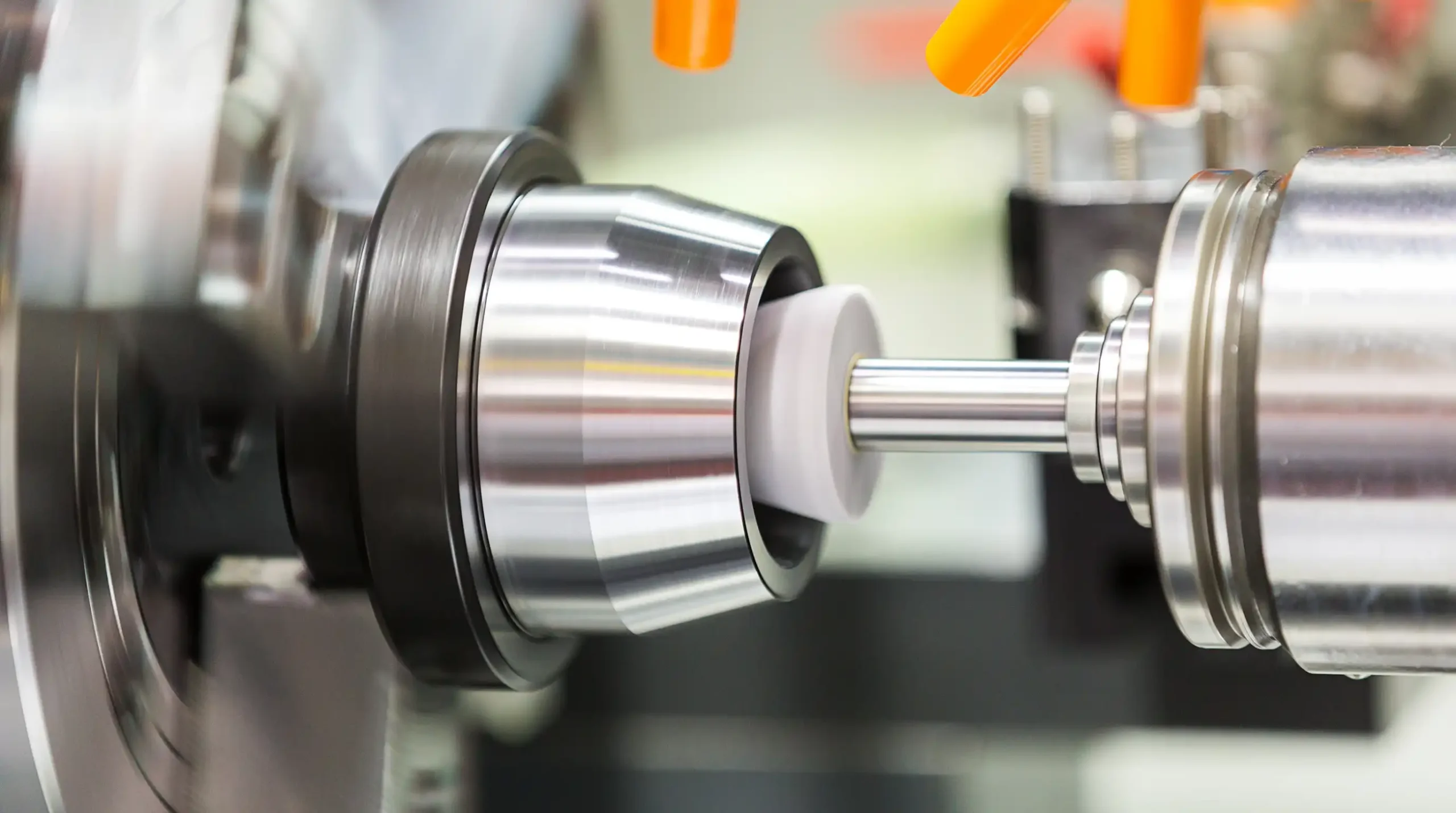
Automated, water-cooled CNC precision grinding is essential for this process. Without continuous, high-volume liquid cooling, the friction generated during grinding creates intense localized heat. This thermal stress alters the molecular structure of the tungsten carbide binder, creating invisible micro-cracks beneath the surface. When the tool is placed back under production pressures, these hidden stress fractures rapidly expand, resulting in catastrophic failure.
Using precise metrology and automated grinding ensures that every backup tier matches the original geometric profile perfectly. This technical precision provides plant managers with total certainty: when a pre-staged backup is pulled from the tool room shelf, it will perform with the exact same reliability and structural endurance as a brand-new factory asset.
Take Control of Your Tool Room
Running a modern manufacturing facility on a reactive procurement model is an expensive gamble. Waiting until a tool breaks to order its replacement leaves your production schedule vulnerable to OEM lead times, shipping delays, and costly operational bottlenecks.
Pre-staging a tiered inventory turns logistics headaches into a smooth, routine process. By mapping out your target production dimensions and preparing your secondary and tertiary backup tiers in advance, you protect your bottom line, eliminate catastrophic downtime, and get the maximum possible value out of your pre-paid raw materials.
Audit your current tool room scrap pile today. By identifying your most frequently used dimensions and implementing a structured, automated resizing program, you can establish a self-sustaining backup pipeline that keeps your machinery moving forward.
How many unique sizing tiers do you currently run across your high-volume production lines?